A publicly-available MD COVID-19 metrics that I didn’t investigate much is cases per ZIP code. I created a dashboard where you can highlight one zip code at a time. Tyler Fogarty built a cool Treemap Explorer. Silver Chips has a nice heatmap of all zip codes as part of their extensive dashboard (a bit like the MDH dashboard). How can we make sense of all this?
(you may need to click on the image to see better)
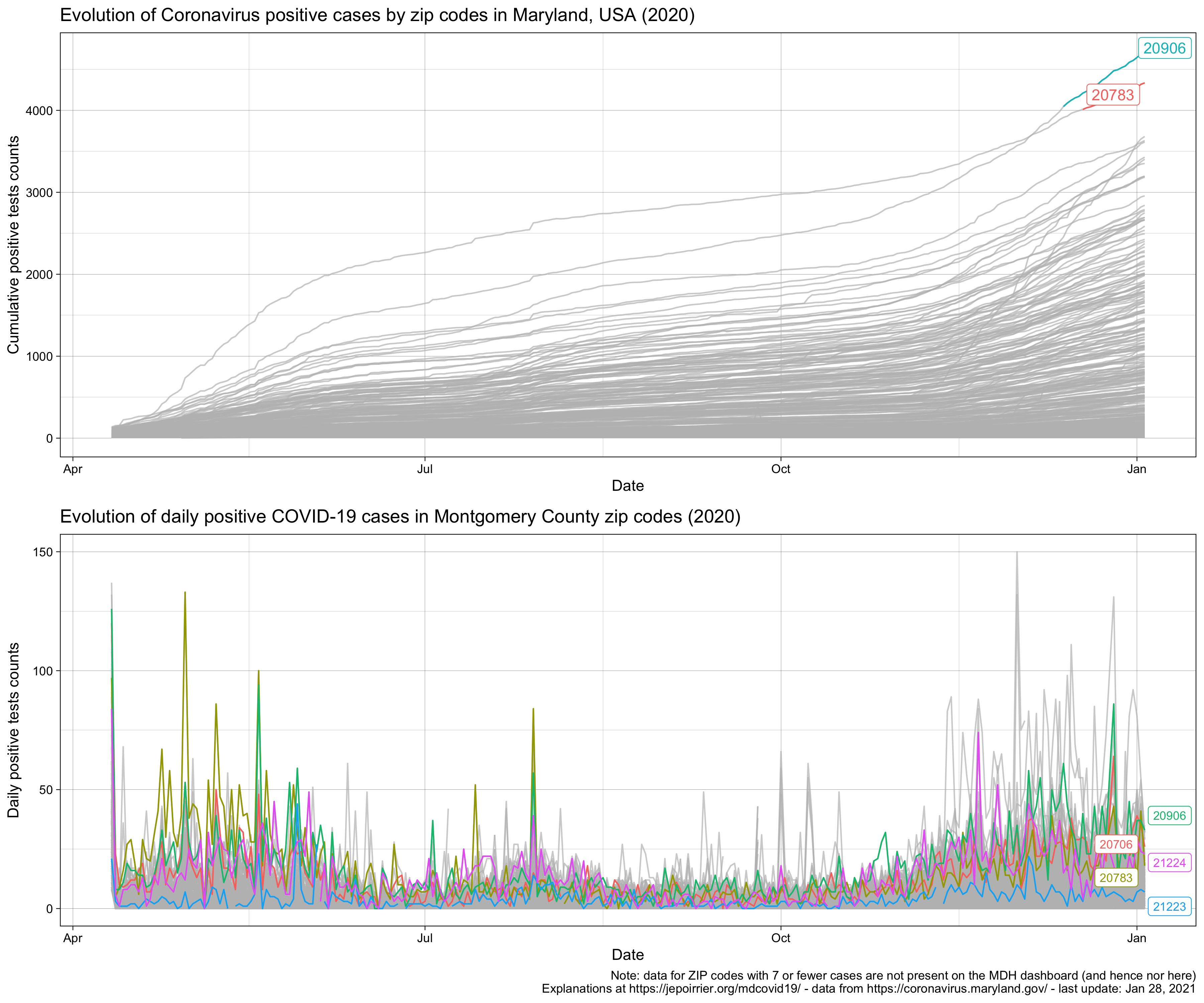
Today (May 30, 2020), 4 ZIP codes have more than 1,000 cumulative cases: 2 in Prince George’s county (20783, Hyattsville, and 20706, Lanham) and 2 in Montgomery county (20906 and 20902, both in Silver Spring). But among the ZIP codes with the most recent daily positive cases, 21223 and 21224 are also in the top 5, both in Baltimore City. All these ZIP codes are in counties that are closed or partially opened, highlighting the need for these regions to remain vigilant and enforce stay at home, wearing a mask and social distancing (at least).
I’m looking at protests in Baltimore and I can’t imagine how detrimental the spread of coronavirus will be and will add to the other issues. Here is what Prof. Murray advise to protect protested (on top of any other precautions):
Harm reduction for protests in a pandemic: •wear your mask + eye protection + heat resistant gloves •yelling can spread droplets, choose signs, drums, or similar noise makers •stick with a buddy group to keep your unknown contacts low •carry water + hand sanitizer + bandages
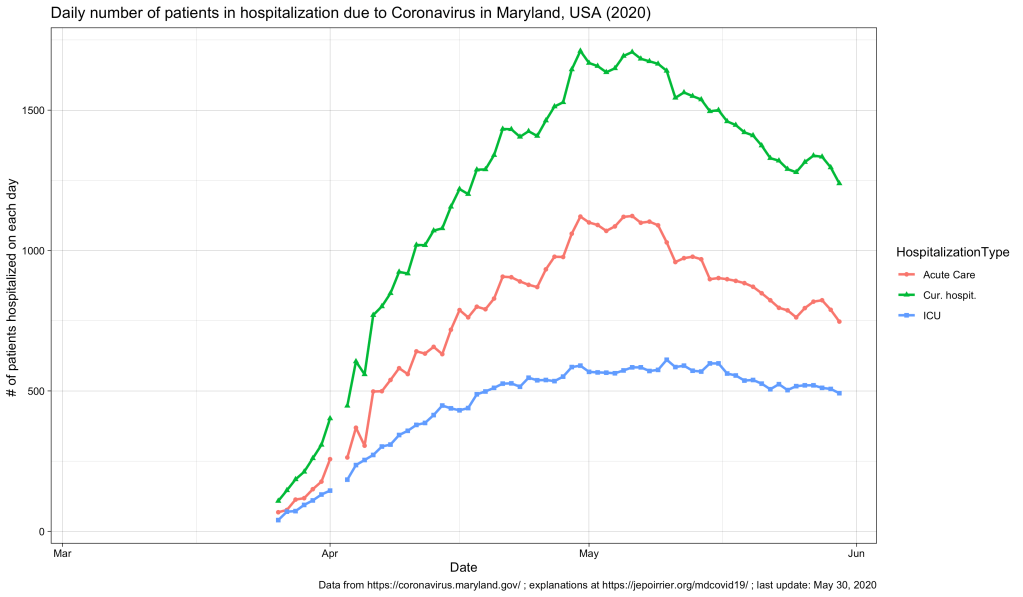
Since my previous post (May 21), tests were broadened in some drive-thru locations for anyone to be tested (5/19 actually) and new testing sites were opened (map of sites here) and we had the Memorial Day weekend (5/25). On May 28, Gov. Hogan mentioned that “hospitalizations, ICUs, and testing positivity rates are the key metrics in determining Maryland’s road to recovery”. On May 27, Gov. Hogan announced that further reopening were taking place (outdoor dining, some outdoor activities for kids allowed, …) but still within Stage 1 (I called it “Stage 1b”).
In terms of hospitalizations, the graph above shows the number of patients currently hospitalized (green line). Since beginning of May, hospitalizations decreased, especially thanks to the decrease of patients in acute care (red line). Patients in ICU (Intensive Care Unit) decreased much slowly. This is probably due the severity of these patients, making them stay for a long time and released from ICU at a slower rate than patients in other departments. And the graph also shows that Maryland never needed the additional hospital beds prepared for a worst scenario.
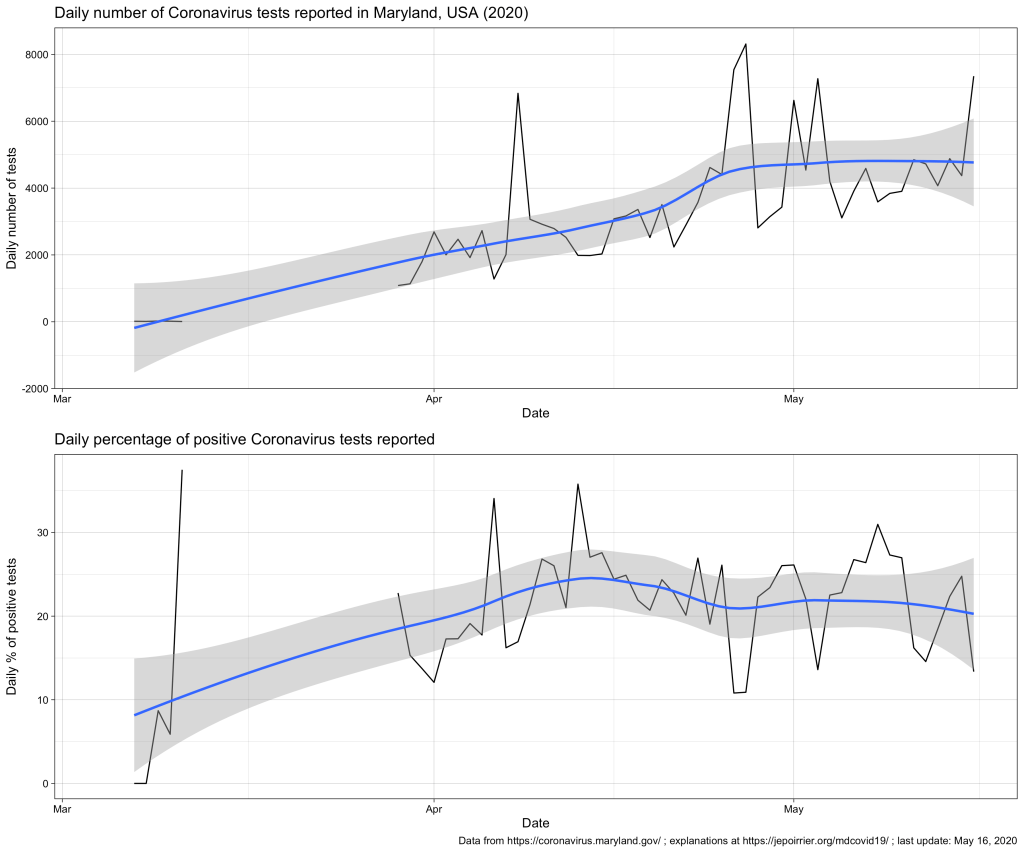
The third key metric the Governor is looking at is testing positivity rate. The chart above represents, on top, the total number of tests reported on the MD Health Department dashboard (adding positive and negative test results). We learned that the Governor is actually not looking at the same positivity rate than the one we can compute from the dashboard:
The dashboard report unique positive and negative tests. If someone was tested twice or more with the same result, it would have been reported only once. If the test result would change, it would have been reported once in each category.
The Governor is looking at all positive and negative tests. If someone was tested twice or more, independently of the result, all tests results would have been counted here.
This difference probably explain why we see a daily number lower than 10,000, despite 500,000+ tests received by Governor from South Korea. But we can’t really say in which direction this difference would drive the testing positivity rate. If more positive tests were under-counted (i.e. counted once instead of the several times they were performed/received), the Governor would have seen a higher positivity rate than on the dashboard. More likely, if more negative tests were under-counted (i.e. negative people tested several times, but counted once), the Governor would have seen a lower positivity rate than on the dashboard. This last option would explain why the Governor decided to go on Stage 1 sooner than expected by just watching the dashboard.
Technically, as a side note, the data for the testing positivity rate that the Governor is looking at is not publicly shared. There is just a PDF with graphs. This difference in what is reported may also explain why, since test broadening (5/19), there was 5 days of ups and downs after which the rate stayed at about 10%.
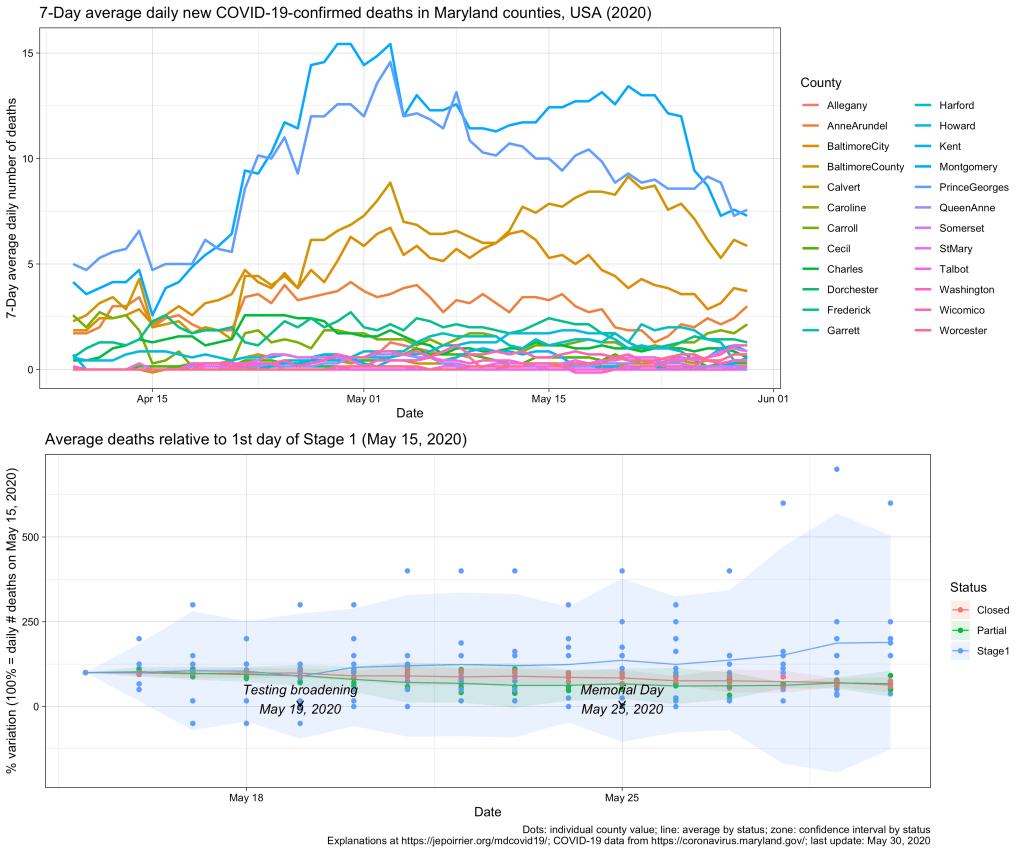
At the level of the State of Maryland, we are not yet looking at the full picture: the last element (that doesn’t seem to be part of the key metrics) is deaths. So far (since mid-March), there have been 2,390 deaths due to COVID-19 in Maryland with a majority of them occurring in congregated facilities (nursing homes, prisons, etc.). With an about-weekly pattern (see below), the daily number of confirmed deaths also seem to decrease (although much slower than hospitalizations or positivity rate).
But if things seem good at the State level, the decision to reopen Maryland came with the empowerment of Counties (the government level below State) to follow or not the reopening. As noted before, if most counties followed the State in Stage 1, some counties did not (some like Prince Georges and Montgomery even remained “closed”). There is no straightforward way to follow hospitalizations in counties (they are not reported on the MD dashboard). But we can follow deaths in counties in the graph below. There it is a bit surprising to see that counties that re-opened, the % of deaths compared to May 15 is actually increasing (i.e. more daily deaths in counties that re-opened) (see blue dots and average in the blue line). On the other hand, % of daily deaths seems to decrease in counties that partially reopened or remained closed. But one should also note the huge confidence intervals around these averages.
Finally, about counties, the situation is about to get messier: since yesterday, Anne Arundel, Baltimore City and Howard counties further allowed some outdoor activities; and starting June 1st, Montgomery and Prince George’s counties, initially closed, will also start to allow some outdoor activities.
So, will it be the end of Stage 1 in Maryland? I think so. Most metrics that are publicly available are pointing in the right direction and, provided there is no outbreak in “pneumonia” like in California, I could see a cautious switch to Stage 2 in the coming days. Gov. Hogan tweeted that he could see Stage 2 during the first week of June.
In my previous post, I was wondering if Maryland was ready to reopen, ready to enter Stage 1 of COVID-19 recovery. I also mentioned, in the end, that if Gov. Hogan announced the reopening of Maryland, he also gave counties the power to “fully” open, to be partially open or even to remain closed. You can see more info about Maryland Strong: Roadmap to Recovery: there is a map of what Counties decided.
Here is a first attempt to look at the fate of the different counties. My idea here is to set the number of cases in all counties on May 14, 2020 (start date of Stage 1) to 100% and see how counties evolve in terms of number of new daily cases.
On top of the figure below, I represent the cumulative, 7-day average (*) daily new COVID-19-confirmed cases in the different counties of Maryland. The chart at the bottom assign the number of daily cases on May 14, 2020 to 100% for each state and follow the % evolution over the next day. In this chart, the blue lines represents counties that follow Stage 1 (e.g. Garrett or Ken), the green line represents counties that partially follow Stage 1 (e.g. Anne Arundel or Frederick) and the red line represents counties that remain “closed” (Baltimore City, Charles, Prince Georges and Montgomery). The counties that remain closed are the ones that have the most cases and deaths.
(static chart updated on May 31, 2020)
I must say that 6 days after Stage 1 (May 20), there is no clear trend. First, it’s normal because any downward or upward trend in number of cases will take a few day to appear (transmission or absence of transmission, incubation, decision to consult and tests, and lag in test reporting). It’s too early to see something. We will also see a confounding factor with the recent decision by the Governor to allow testing of people who do not present any symptoms (in some testing sites). Nevertheless, I was expecting to “see something”; here it just seems it’s the same.
But another reason for “not seeing anything” might be that the cases are not a relevant metric. We can already see that it is fluctuating widely every day. There are even days when less cases were reported than the day before (it might have been a data entry error on my side). The only other parameter that the MDH displays in its dashboard is the number of deaths by counties. I plotted this and it’s the same bizarre chart. How to improve this? Any idea? Don’t hesitate to comment below or to send me an email.
Update on May 24, 2020: I updated the chart of cases after Stage 1 (see above). Currently the confidence intervals (the shades) are so overlapping that differences that we could see are meaningless. Cases may not be a good metric.
I also created the same chart for deaths (see below). Here we see clearly a positive picture: in all counties that are partially open or closed, the mean number of deaths is decreasing. Note however that we are only 10 days (today is 5/24) from May 15 and this may just be a trend that existed before and not something new due to the decision to remain (partially) closed.
(static chart updated on May 31, 2020)
In counties that are in Stage 1, the mean number of deaths is actually increasing. The same comment applies: it may be too early to actually see an impact of the opening (especially deaths could be far from the case detection). Besides, the confidence intervals (the blue shades) are very wide. Hopefully things may become clearer in a few days (and for the best, given we are talking about a disease and people dying from it).
Maryland is in state of emergency since March 5, 2020 due to COVID-19. Governor Larry Hogan announced on May 14 that Maryland will “gradually reopen with flexible community-based approach” (the official declaration is here). The MD Strong plan said “a 14-day downward trajectory of benchmark metrics – or at least a plateauing of rates – is required before recovery steps can begin“. This Phase 1 started yesterday, May 15, 2020. So, are we there already?
Regarding testing … After a peak in testing (up to 8k/day) and the arrival of tests from South Korea, testing is stagnating ~ 4k/day in Maryland. The daily % of positive tests seem to stagnate ~ 22% since May started and decline a bit, ok. Despite a peak, today, we are still far from the daily number of tests we could reach with the tests from South Korea. And there is still a high percentage of daily positive cases.
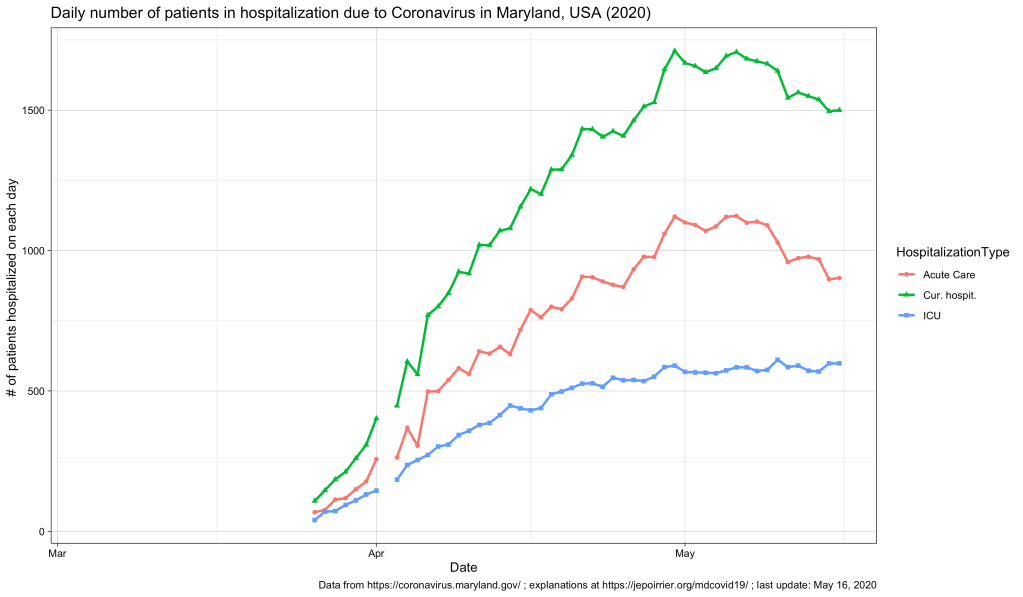
Regarding hospitalizations … Thanks to a drop in acute care during the last weekend and this one, the number of patients hospitalized seems to decrease since beginning of May. This sudden drop was followed by a slight re-increase. Hopefully this will continue to decrease (even if in waves like this).
Regarding deaths … Despite a record number of daily reported deaths, early May, and wide variations in this daily metric, it seems that we are plateauing/decreasing here.
So, we can cautiously understand the decision taken, based on data. Note it’s not a total opening: the “flexible community-based approach” means that counties (the government level below the state of Maryland) are empowered to make decisions regarding actually opening or not. And some counties took that opportunity. For instance, Montgomery, Prince George’s and Charles (on the East / South-East of Maryland, surrounding Washington DC and bordering Virginia) decided to remain closed. Baltimore City also decided to remain closed. It is understandable as all these counties are among the ones with most cases and most deaths. Here is a small infographics summarizing the Stage 1 reopening:
It will be interesting to see how the next 2 weeks evolve, and especially if counties that remain closed will have a different evolution than the ones that opened.
Since a few weeks, I report the raw number of COVID-19 deaths in Maryland counties. If this gives an idea of the cumulative number of deaths – which is interesting – it doesn’t reflect the fact that some counties have more inhabitants than others. That’s why I plotted below the number of COVID-19 deaths adjusted for the population (i.e. the COVID-19-specific death rate):
(click to see more details)
Today (May 16, 2020), in terms of absolute number of deaths, Montgomery, Prince Georges and Baltimore County are the top 3 counties (this is the same for cases but not in the same order). In terms of confirmed deaths per 100,000 population, the top 3 counties are Kent, Prince Georges and Montgomery.
Edited a few minutes after publication to add a paragraph with the comparison with Maryland and flu; adapted the y-axis label following Michael Brown‘s comment on Twitter (thanks!); and specified the flu-specific death rate from CDC following Melissa Schweisguth‘s comment on Twitter (thanks too!).
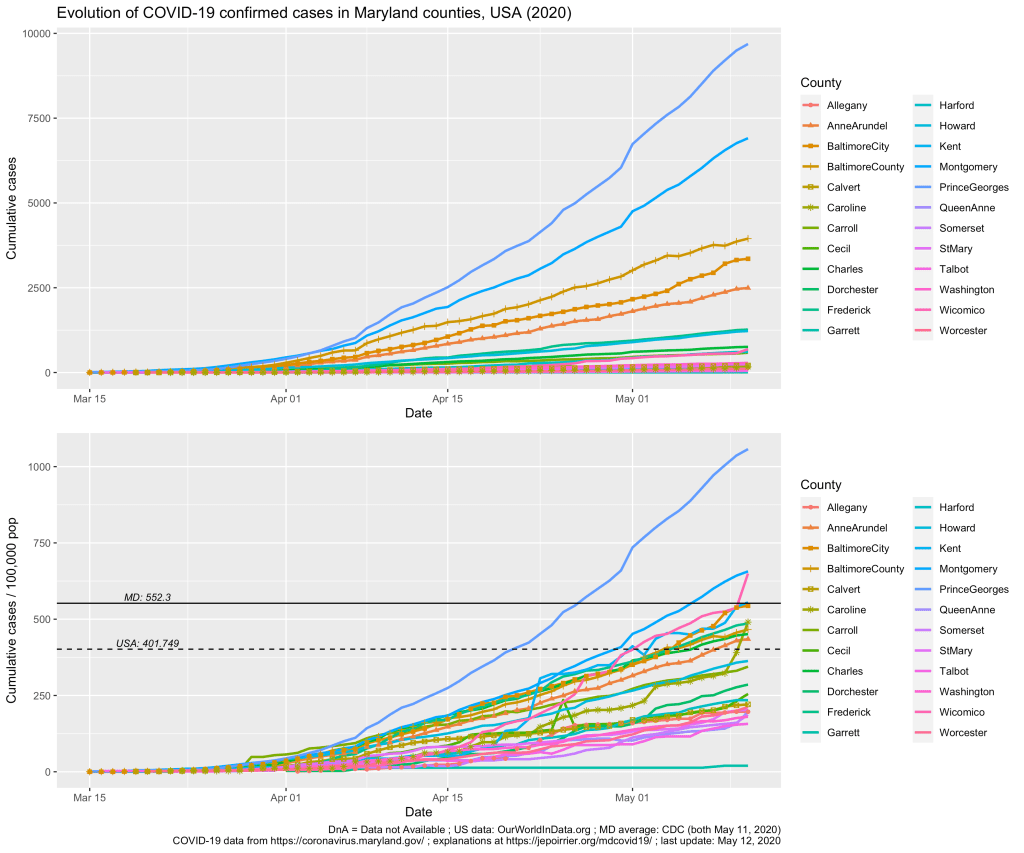
Since a few weeks, I report the raw number of COVID-19 cases in Maryland counties. If this gives an idea of the cumulative number of cases – which is interesting – it doesn’t reflect the fact that some counties have more inhabitants than others. That’s why I plotted below the number of COVID-19 cases adjusted for the population:
(click to see more details)
Today (May 11, 2020), in terms of absolute number of cases, Prince Georges, Montgomery and Baltimore County are the top 3 counties. In terms of confirmed cases per 100,000 population, the top 3 counties are Prince Georges, Montgomery and Wicomico (due to a recent surge in cases).
Rank on May 11, 2020
Absolute # of COVID-19 cases
COVID-19 cases per 100,000 population
1
Prince Georges (9,687)
Prince Georges (1,057)
2
Montgomery (6,909)
Montgomery (656)
3
Baltimore County (3,948)
Wicomico (649)
4
Baltimore City (3353)
Kent (555)
5
Anne Arundel (2492)
Baltimore City (544)
This is a lot given that, today, the average for Maryland is 401/100,000 (source: CDC) and the average for the US is 552/100,000 (source: OurWorldInData).
Following up on my two previous posts (here and here), I am writing a third post on COVID-19 in Maryland because I believe we enter a new phase.
Before continuing, please note that the same disclaimer as in my previous post applies here (in short: read the CDC and MDH websites for official information).
In the first phase, the importance was to detect and make sure COVID-19 patients were treated (also: make sure not to overwhelm the healthcare system, flatten the curve, lower the baseline, & stay at home!). My two previous posts were following these efforts, thanks to daily data released by the Maryland Department of Health (MDH) on its dashboard. My second post will still be updated with the latest data from there, go read it!
This first phase is not over yet but we started to see metrics states and governments will consider in order to “reopen”. Hence this second phase is adding specifically these metrics, again thanks to the Maryland Department of Health (MDH) on its dashboard (and probably other data sources that will be linked as I use them).
In Maryland, the Governor issues a Roadmap to Recovery on April 24, 2020. In this (easy to read) document, a lot of aspects are introduced and here is what will be tracked and for how long:
“state public health officials should review the numbers of new COVID-19 daily case counts, hospitalizations, and deaths carefully” and “The results of reopening decisions will take 2 to 3 weeks to be reflected in those numbers.“
“the White House’s gating guidelines state that a 14-day downward trajectory of benchmark metrics – or at least a plateauing of rates – is required before recovery steps can begin, and before each additional recovery step can move forward“
That’s why Governor Larry Hogan tweeted his focus on April 24:
The key numbers we are most focused on are on the rate of hospitalizations and the number of patients admitted to ICU. If these numbers continue to plateau, Maryland could be ready to begin the recovery in early May. This data is updated daily at https://t.co/Shy9A0czWz.
States should consider initiating the reopening process when (1) the number of new cases has declined for at least 14 days; (2) rapid diagnostic testing capacity is sufficient to test, at minimum, all people with COVID-19 symptoms, including mild cases, as well as close contacts and those in essential roles; (3) the healthcare system is able to safely care for all patients, including providing appropriate personal protective equipment for healthcare workers; and (4) there is sufficient public health capacity to conduct contact tracing for all new cases and their close contacts
On April 27, 2020, this is what we currently have … On the first chart, the number of positive tests is increasing (probably due to the increase of testing done), hospitalizations and deaths are slowly going up, overall. On the third chart, it seems the number of people in ICU is plateauing. Below these charts, I’ll post the updated charts as days are passing …
Updated charts (look at the date at the bottom right):
Since the Maryland Department of Health (MDH) started to display number of COVID-19 cases for each Zip code in its dashboard, I was wondering how to display this information in a nice way. The MDH display the information as a map – very nice but it lacks from where each Zip code came from: is the number of cases increasing or decreasing?
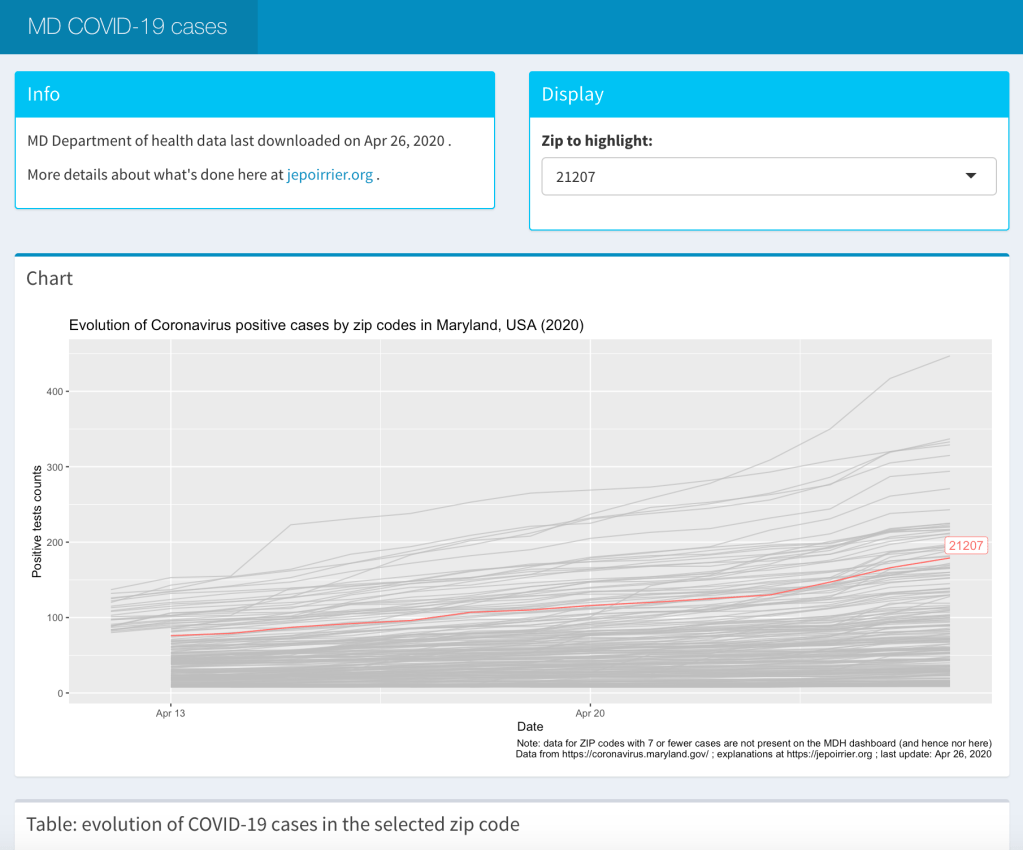
Following on my busy chart with the evolution of all Zip codes (and highlighting just one of them – that may not be the one you are interested in, see previous post), I created a simple dashboard where you can select the Zip code you are interested in and see how cases are evolving. You can play with it here: https://jepoirrier.shinyapps.io/md-coronavirus-zip-app/ (screenshot below). Enjoy!
Following up on my previous post, here are updated trends in Coronavirus cases in Maryland (USA), the state I live in. I am writing a second post because the Maryland Department of Health (MDH) updated its dashboard with way more data than before (more on this below). Before continuing, please note that the same disclaimer as in my previous post applies here (in short: read the CDC and MDH websites for official information).
The new type of data that the MDH released is: the total number of hospitalizations and releases, more granular age categories and the number of cases by sex. And on March 28, we saw the return of the number of negative tests!
Here are the plots that I will try to update daily (check the bottom right of charts to see when it was last updated):
On March 28, MDH reintroduced the total number of negative cases (11,516). Having the total number of cases done is important because it allows to understand better the disease dynamic than just the number of positive cases …
Suppose you have 992 positive cases (like on March 28) but no total number of cases tested. It’s a lot – or maybe it’s not much, who knows? It depends on how many were tested. Up to that day, imagine that only 1,000 people were tested – this becomes a lot of positive cases because 99% of people tested turned out to be positive. Now, MDH said they actually tested 12,508 people – this means that 7.9% of people tested turn out to be positive. Given the few tests available, testing is reserved for people who are believed to be at risk (more or less ; read the MDH testing FAQ here). So less than 10% of people tested (thought to be at risk) turn out to be actually infected. That’s good!
End of March, the MDH also released more granular data on the age categories of the people tested positive. Age groups 30-39 and 40-49 have the most cases. Therefore, mostly adults are impacted, probably among people working (who are not or can’t do social distancing). Given hospitalization and death rates are lower in these age groups than in older adults (most hospitalizations, ICU admissions and deaths are occurred among adults aged ≥65 years with the highest percentage of severe outcomes among persons aged ≥85 years, according to the March 26 CDC paper), we’ll hopefully see less dreadful cases in adults than in older adults.
On March 30, the MD governor decided that everyone should stay at home, except for food and medicine shopping. The recent days see an increase in cases but especially an increase of deaths, due to an outbreak in a nursing home.
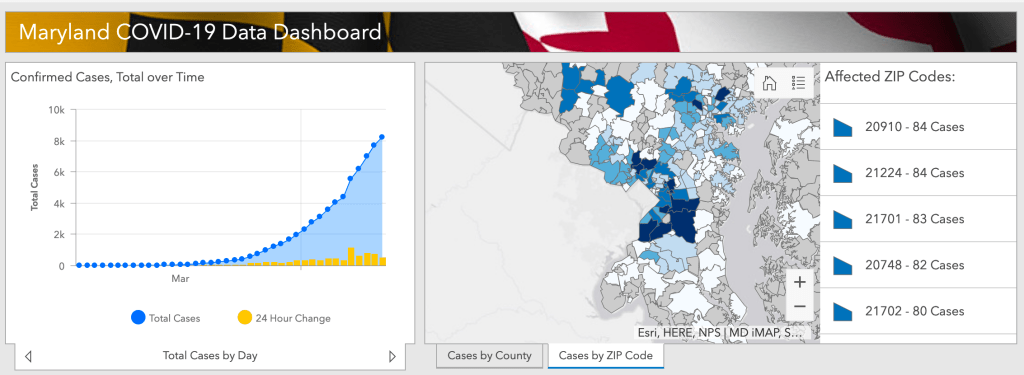
We entered April and the number of cases continued to increases. On April 3rd, the MDH page on coronavirus got enriched with a very nice dashboard with a lot of data:
On April 5, we could see that all numbers are continuing to climb. Frederick County and Baltimore County are shooting up (with Frederick County now being the first county in number of cases). I’ve added a chart with the daily number of cases and it’s hard to grasp that nearly 500 people received a positive COVID-19 test result today (in 1 day) (that’s about an entire elementary school, except the age category doesn’t match)! And we are not even in a state where the number of cases explode … We also see that all adults [30-59] have most of the cases, less for older adults and even less for children and teenagers.
On April 7, Maryland continues to see an increase in all cases, hospitalizations, in all counties and all age groups. Since yesterday, we have more than 1,000 hospitalizations. We went about 100 deaths today. And, for the first time, Prince George’s County has more than 1,000 positive cases of COVID-19 (+104 from yesterday).
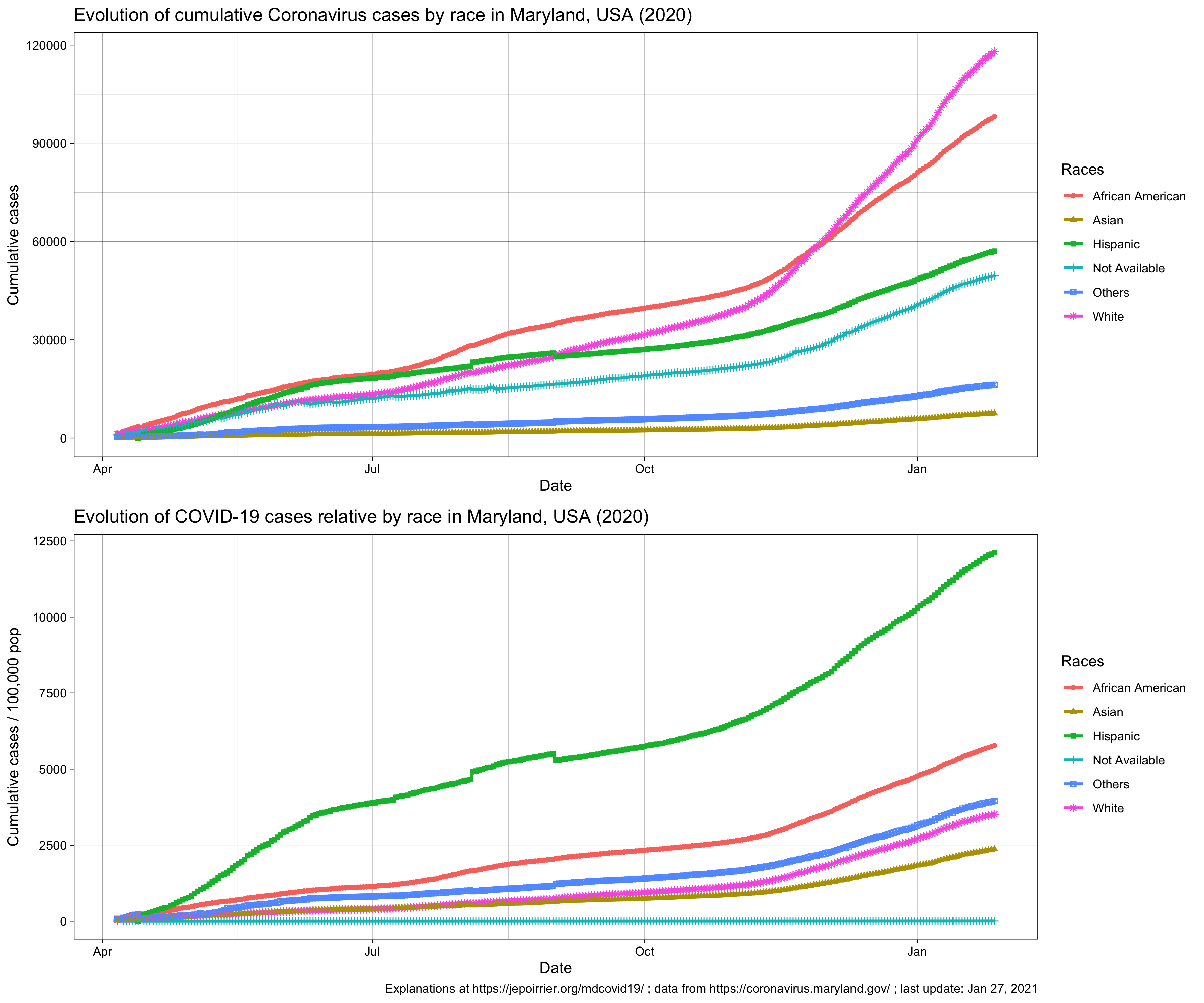
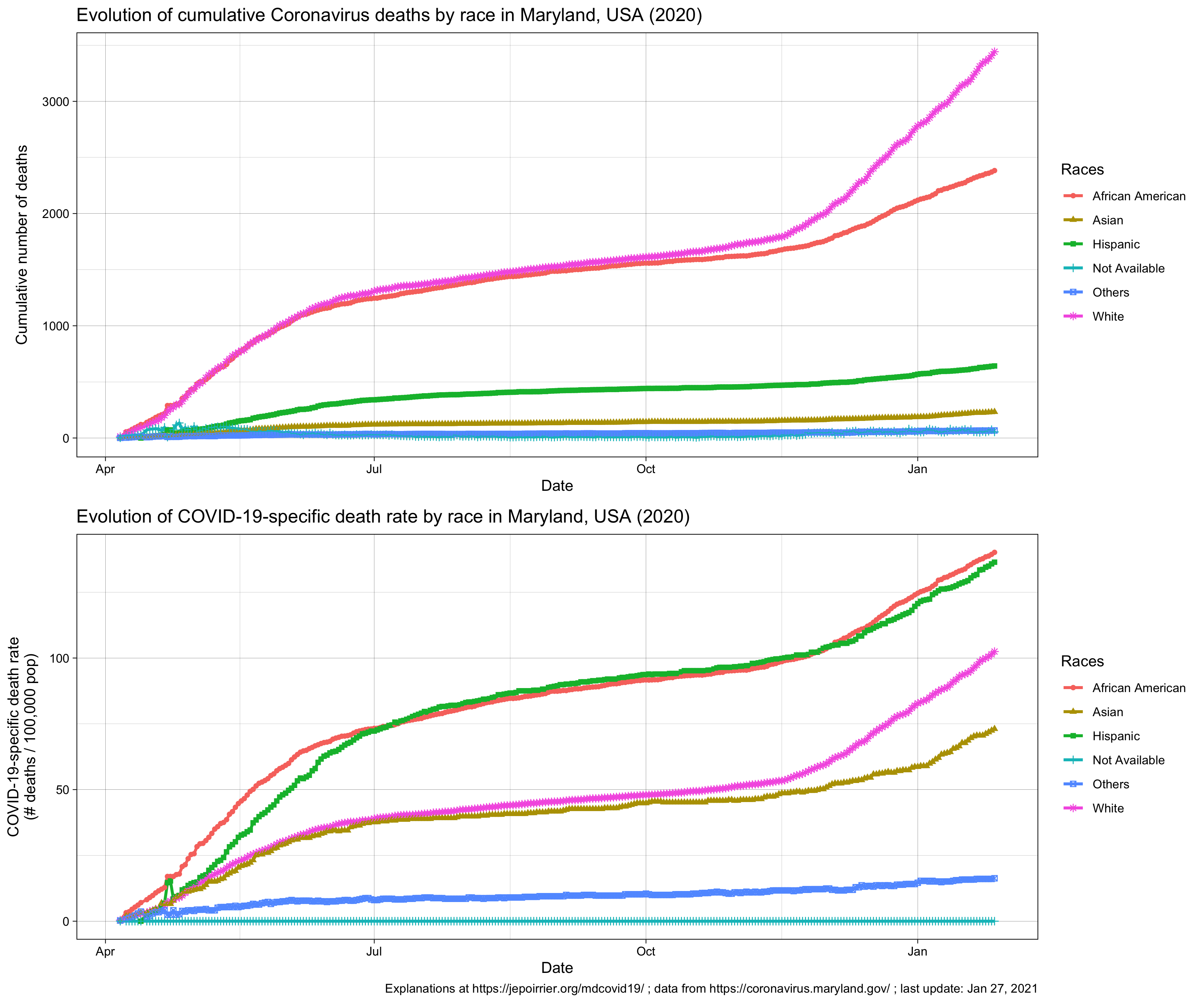
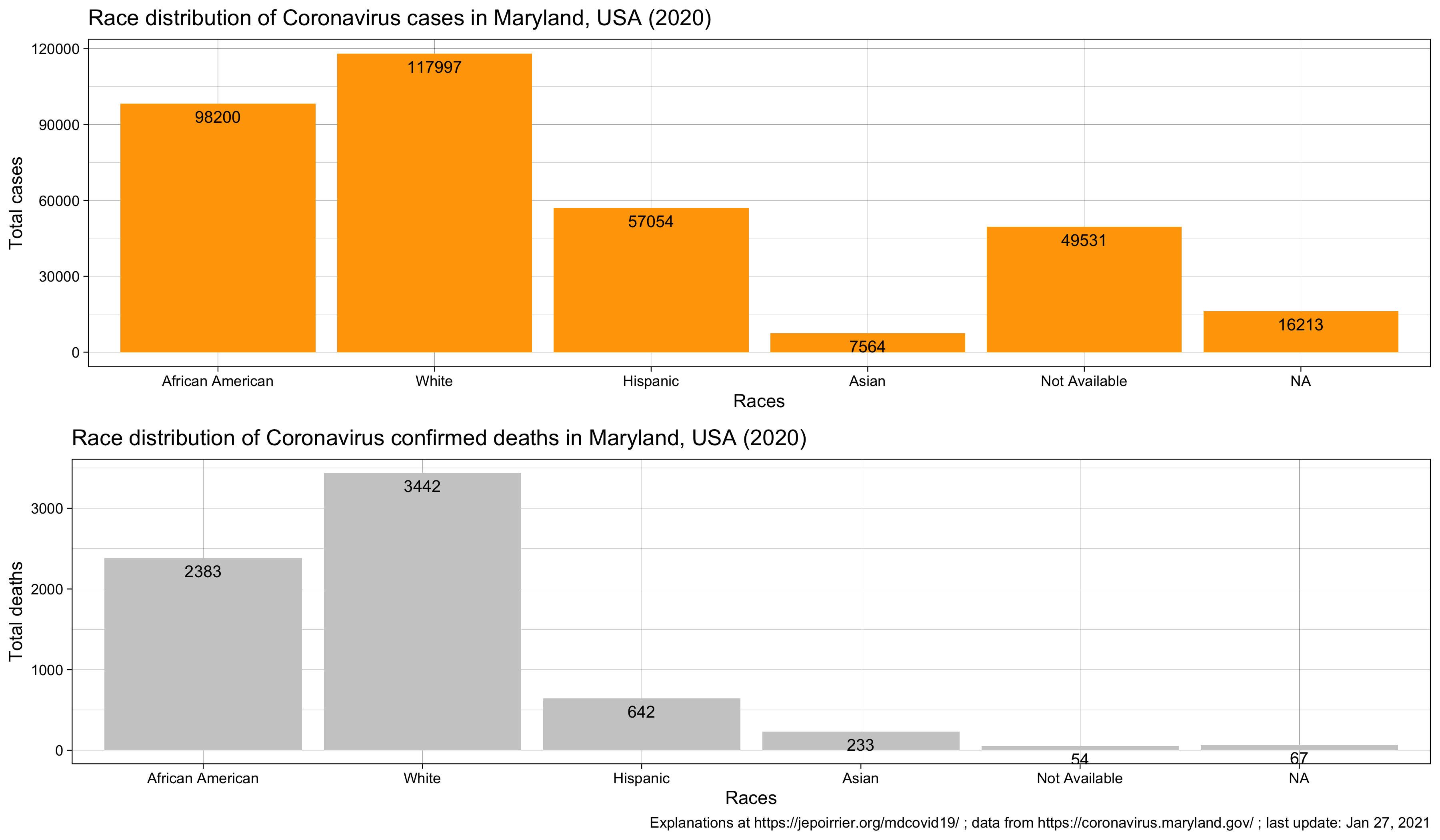
On April 9, Maryland continues to see an increase in all cases, hospitalizations, in all counties and all age groups. Today, the MDH started to display the number of cases and number of deaths by race/ethnicity. The African-American community has the most number of cases, followed by the White community – but we shouldn’t forget about the “Other” and “Data Not Available” categories. On top, as usual, although it’s unfortunately not surprising that the African-American community is harshly impacted, one should keep in mind that without the total number of tests done by community, there is little we can say. Given the percentage of positive tests is about 15% overall, one should see if this percentage is similar by community or not.
As the number of cases continues to increase and the data made available by the Maryland Department of Health also increases, I went back to the code and changed a few things (mainly to help maintain it on a daily basis). One choice I made is kind of breaking things: from now on, the trend by age group will not start at the same date as all charts. That’s because MDH changed their reporting of age structure on March 27. I no longer report the previous data (for age groups). I also added the trends of number of deaths by county and the gender distribution.
On April 12, the total number of positive cases in Prince George’s County is now above 2,000. I added the number of hospitalized. This is approximately the number of patients in hospital each day (equation: total # hospitalized – total # released) as a proxy for the number of patients currently sick (this is not perfect because of the lag in reporting, the data not available since the beginning, etc.). MDH also started to report the # of positive tests by zip code (this is very labor-intensive to transcribe these, I won’t do any chart with this data unless there is an easy way to download the data).
On April 13, cases continued to increase, with a small dip (maybe due to the weekend). Dorchester and St-Mary’s counties reported their first death due to COVID-19. On the good news side, the number of new patients released today (+147) was higher than the number of new patients hospitalized (+115). This reduced a little bit the number of patients currently hospitalized.
On April 14, I found a way to get data by ZIP code without too much hassle. I added the data to the Github repository and added the chart above. Any idea to improve the chart is welcome! (Straightforward idea: displaying ZIP codes as a map – but then we lose the temporal aspect)
On April 15, MDH added probable deaths. According to the CDC, death due to COVID-19 with certainty should use ICD-10 code U07.1. Where the cause of death is established with a clinical or epidemiological diagnostic (but with inconclusive or without lab results), the ICD-10 code U07.2 is proposed. There is a 3rd level of uncertainty, when the cause of death is “probable” or “likely” COVID-19. There, this guidance doesn’t specify what to do (it doesn’t mean that future guidance wouldn’t refine the algorithm). I assumed here that MDH “probable deaths” are coded with U07.2. Actually, it’s easier than that: Kata D. Hall mentioned in a tweet that a “death is classified as probable if the person’s death certificate lists #COVID19 as the cause of death, but it has not yet been confirmed by a laboratory test“. In total, today, probable deaths due to COVID-19 represents 18.3% of deaths due with certainty to COVID-19.
This had implications for the death count by county. Confirmed deaths diminished in some counties (e.g. Prince George’s: -7, Montgomery: -10, Baltimore County: -14) while the number of “probable” deaths in most counties doesn’t counterbalance these loss (e.g. Prince George’s: 11, Montgomery: 14, Baltimore County: 5). This is because new deaths occurred and a new category appeared: Data Not Available (i.e. deaths for which we don’t know the county, strange).
On April 15, we also see the cumulative number of positive cases to be over 10,000 for the first time (10,032). It took 38 days to reach that number. MDH also started to report cases and deaths in the Hispanic community. One can see they were reported in the “Other” community before.
On April 16, cases and deaths are still up. Montgomery County is now over 2,000 confirmed cases. Following this article in NPR (The New Coronavirus Appears To Take A Greater Toll On Men Than On Women), I was interested to see what we could see in Maryland. We have more positive cases in women than in men; that would go in the same direction as in the article: if women seek more testing than men (something we can’t see with MDH data), it’s normal more women would turn positive than men. What the article didn’t show (and what we can see at least in Maryland) is that, of all positive tests, men seem to die in greater number (4.1% instead of 3.2%) – see table below. Note that it can be due to a higher risk of dying for men and/or simply due to the lower number of tests done in men (increasing the proportion of more urgent cases).
On April 17, we reached a total of more than 50,000 negative cases, more than 11,000 positive cases, more than 400 deaths and no new patients released. Not a good day. I stop reporting the negative tests on the charts with cases in order to better look at the cases. Negative tests are indirectly on the % of positive tests.
On April 18, all numbers are still going up. However, even if testing is progressing (but not accelerating yet), the percentage of positive cases seems to have difficulties going above 18-19% of all tests.
On April 19, numbers are still going up. At the bottom of the graph, today see more 30-39 years old dead due to COVID-19 than 40-49 years old (2 more) although this age category “benefited” from the inclusion of “age not available (DnA below). I don’t know if it’s a temporary glitch or an actual trend? Also, there seems to be a cycle of ~6 days where the daily approximate # of COVID-19 patients remaining in hospital decreases (less hospitalization and/or more releases). But it’s maybe an effect of the weekend?
On April 20, Maryland Governor Hogan announced he procured 500,000 COVID-19 tests from South Korea. Hopefully this will increase the testing capabilities in Maryland. All data still going up.
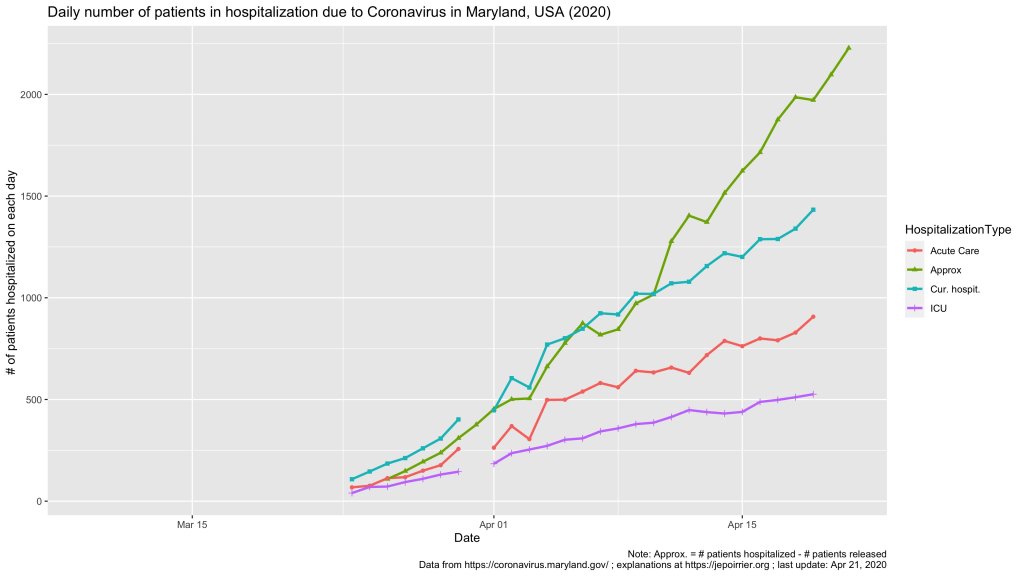
On April 21, MDH released current and past data on the number of patients daily in hospital and broken down by acute care department and ICU. I therefore removed the previous way to compute this data as it’s not useful anymore (and I overestimated this number in recent days).
On April 22, the number of total positive ever done in MD was above 60,000 (but still no drastic improvement due to the 500k tests delivered last weekend). And we have now more than 600 deaths. Baltimore County has now more than 2,000 cases since the beginning of the pandemic. And Montgomery and Prince George’s counties have both the same number of deaths (58). The number of confirmed deaths in the 80+ age group is growing fast while we still don’t see any deaths below 20 years old (that’s great!). Also, MDH played a bit with past hospitalization data on the dashboard. Thanks to Tyler Fogarty for spotting it and correcting it directly in the GitHub repo (no need to check the dashboard and re-copy past data :-))!
On April 23, cases continues to accrue and no sign yet that the tests ordered by Gov. Logan from South Korea are impacting results. However, if hospitalization and discharge procedures didn’t change, we can see a second day of decline in the number of people in hospital. Also: it’s been there since a few days now, the zip code 20783 (Hyattsville, MD: NE of Washington DC) is surging in number of cases and overtook 21215 (Baltimore, MD: MW region) today (309 cases vs. 293).
On April 26, we see the trend in testing increasing again (+7,542, we are now close to 100,000 tests since the beginning of this count). Since the last 24 hours, we saw a huge increase of negative reports and a decrease of negative reports, bringing the % of positive test at 19.22% of all tests. However, the acute care beds were increasing (+63 in the last 24h) and therefore the total number of beds occupied today too. I added the proportion of positive and negative cases and it seems that, on a daily basis, it slowly decreases.
Disclaimer: Although I work in infectious diseases, I’m not a specialist in Coronavirus. For the most up-to-date information on Coronavirus in the US, please visit the CDC website. For the most up-to-date information on Coronavirus in Maryland, please visit the Maryland Department of Health. That being said, now you can proceed at your own risk 😉
Living in Maryland during the Coronavirus pandemic, I am interested to follow the number of cases that my state has so far. The Maryland Department of Health (MDH) has now a dashboard representing the count of positive cases and the breakdown by different counties. It’s nice but it only includes the latest update and the past trend is forgotten. So I decided to plot the number of cases with whatever numbers is given on the dashboard.
Now, a bit of background … I started this as a simple exercise with no other intention than plotting the trend of cases tested positive since Maryland started reporting cases (March 9, 2020). After a few days, it stopped reporting the total of negative testing done daily. The reason was: “Now that COVID-19 testing has expanded and is available through commercial laboratories, MDH is no longer reporting negative and pending numbers of tests in Maryland. All positive results obtained by commercial laboratories are reported to MDH and included in the confirmed cases count“. Although the reason is certainly understandable, this doesn’t allow us to follow the evolution of testing in general in the state. Testing and the availability of tests is a sensitive topic in the US …
On March 15, the MDH started to report the number of positive tests in each county. Initially, only 8 (of 24) states had cases. On March 16, the total count for Anne Arundel county dropped from 2 to 1. I don’t know the reason.
On March 17, MDH reported an increase in positive cases detected higher than previously. This can be due to a lot of things (increase in testing, increase in cases per se, …). Frederick County reported its first case.
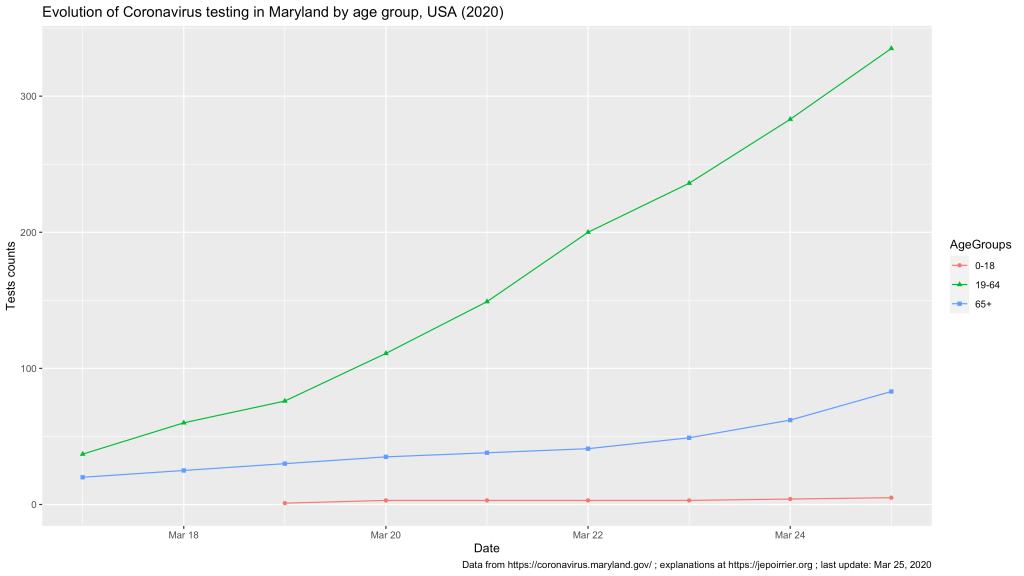
On March 19, MDH unfortunately reported the first death due to Coronavirus. The total number of positive tests reported is now above 100. Allegany County and Calvert County reported their first positive tests. Today, I also started to split my graph in 3: one for the total number of cases, one for the cases by counties and the last one by age group. This reporting by age group was started on March 17 by MDH. We see the burden is mainly in adults younger than 65 – but this may be simply due to higher level of testing in this population (again, without the number of tests done, you can’t really conclude anything).
On March 20, first cases appeared in Wicomico County and Worcester County. It seems that the number of positive tests is increasing faster (again, without the total number of tests done, you can’t really conclude anything).
On March 23, we see that all counties, except Allegany, Kent and Dorchester, have cases now. I changed the y-axis of the total number of cases to a log scale (therefore it gives a “flatter” look to the curve). But we are still in a rapidly increasing phase of the disease …
On March 24, we now have more than 300 positive tests, among which 107 in Montgomery County alone.















 Jean-Etienne's blog