Tag: pricing

What to look for at ISPOR 2025 – Regulations & pricing

ISPOR 2025 is now in about two weeks and in this second post about sessions to look for, I’ll talk about regulations and pricing (this is part of a series: last week, I wrote about Modelling; next week, I will write about AI).

IRA letters on a pile of scientific papers with a view of an American city at night

As the main edition of ISPOR is held in North America, the Inflation Reduction Act (IRA) will naturally attract considerable attention. It will start with the very first Plenary Session, promising to explore the impact of price limits on innovation and provide real-world examples.

The lessons learnt or (unintended) consequences-type of sessions are in vogue, with sessions like “Year 1 learnings“, “Implications for Providers“, “Did the IRA spook the industry” (from the perspective of rare diseases), “Unintended consequences“, and a discussion “Beyond Drug Negotiation“.

Here is one session to remind you that timing is essential … The IRA was introduced in 2022, under US President Biden, but the first Maximum Fair Prices will be implemented in 2026, under US President Trump. The latter has already introduced sweeping changes in the pharmaceutical research landscape in the US. But I found one interesting issue panel somewhat prophetic: “IRA Under Trump: What Is Next?“. Given the timelines for panel submission for ISPOR (before the 2024 elections), I have so many scenarios in my head about the authors trying to write the abstract broad enough to encompass potential futures while navigating the possible sensitivity of the situation, even before it happens. It will be an interesting panel to attend …

A panel also takes another perspective, wondering if the IRA became the US HTA. From the abstract, I understand the authors’ perspective, but I don’t agree: although the IRA will impact millions of Americans, it still lacks a direct impact on commercial plans. But it’s obviously a broader discussion than a terse comment in a blog post.

JCA letters on a pile of scientific papers with a view of an European countryside in the afternoon

It will also be the first ISPOR conference after the European Joint Clinical Assessment (JCA) process started in Europe. Therefore, it is a bit early to draw conclusions and look at lessons learnt. However, two interesting sessions will examine it from the outside: one will examine the global (i.e. ex-EU) impact of JCA, and another will consider JCA as an enabler of cross-border collaborations.

Finally, because I recently contributed to projects supporting investors with health economics tools and assessments, I will be interested in the Input/Output Modelling panel: it will look at the broader impact of investments in health and pharmaceutical products. Their abstract reminded me of some early work published by a former boss on the societal impact of vaccination (I wonder if vaccines will be mentioned, by the way). The last workshop (the last one mentioned here) is titled “HEOR meets investing“, and it is precisely what we recently did: early health economics modelling can greatly help secure investments by reassuring about the potential cost-effectiveness of a drug, and justifying studies to fill crucial input data gaps.

I missed some panels in this short helicopter view. Do you have any other suggestions?

Next week, I will look at AI’s potential progress in health economics. Stay tuned!
About antibiotic resistance and the price of drugs

Many headlines stated today that UK wants to tax pharmaceutical companies again in order to contribute to a pooled fund against antimicrobial resistance (AMR). The proposed ‘pay or play’ mechanism is a bit more subtle than that. The report (full text here) is also suggesting other financing mechanisms (including the improvement of existing ones) as well as describing potential non-financial measures to reduce these resistances in the first place. Actually, financial measures occupy only about 6% of the report. But headlines need to be catchy. Let’s see a broader picture on tackling antibiotic resistance …

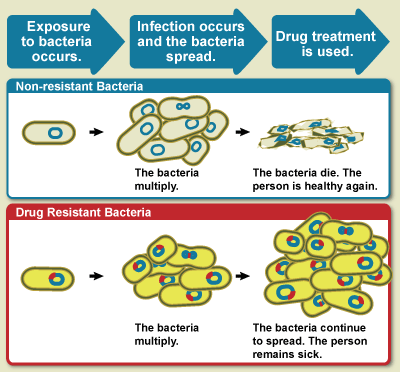
The WHO summarizes well the situation: “Antibiotics are medicines used to prevent and treat bacterial infections. Antibiotic resistance occurs when bacteria change in response to the use of these medicines. Bacteria, not humans, become antibiotic resistant. These bacteria may then infect humans and are harder to treat than non-resistant bacteria. Antibiotic resistance leads to higher medical costs, prolonged hospital stays and increased mortality.

An illustrative diagram that shows the difference between a drug resistant bacteria and a non-resistant bacteria.

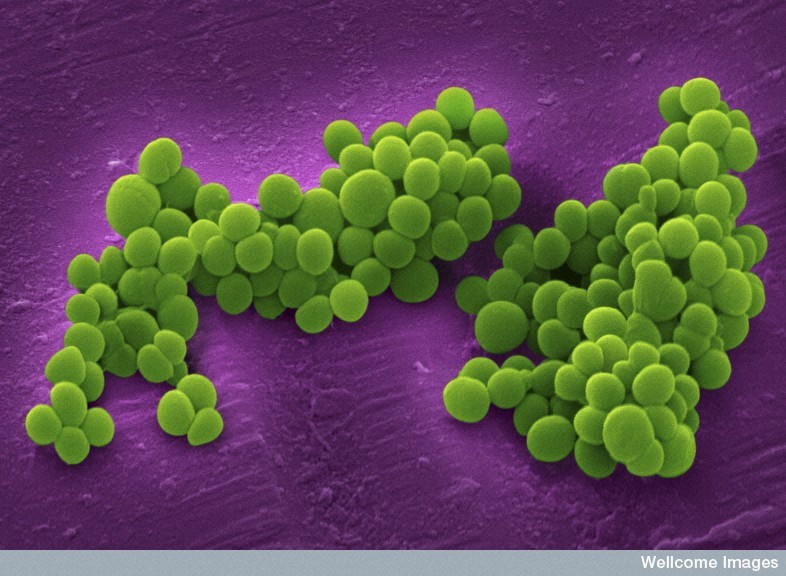
For Belgium, the Joint Programming Initiative on Antimicrobial Resistance displays a long list of governmental bodies and initiatives that study and/or tackle AMR. The Belgian Scientific Institute of Public Health has a dedicated program against AMR. Despite that, a recent study showed that, in 9 European countries, 99% of bacteria Streptococcus pneumoniae taken from nose of people aged 4 or more show antibiotic resistance (S. pneumoniae causes many types of pneumococcal infections like pneumonia or meningitis). The same study showed that Belgium has the worst resistance rate against the antibiotic cefaclor (fortunately authors also show there is little resistance against the most common antibiotics used against S. pneumoniae). A study from last year in 8 European countries (including Belgium) showed that approximately 4 out of 5 Staphylococcus aureus (another bacteria) isolates from individuals without specific health issues were resistant to at least one antibiotic and more than 7% of them are multidrug resistant. And we are talking here about Belgium, a country with a well developed healthcare system, following best practises in antibiotic stewardship and often considered as an example for the reduction of antibiotic consumption outside hospitals.

B0006889 MRSA

Coming back to the UK report, a big part of it advocates more or less what the 2015 WHO country situation analysis on antimicrobial resistance described too: countries need a plan to fight AMR, surveillance and laboratory capacities should be raised (no data = no knowledge of the situation and no capability to measure progression), antimicrobial medicines should be correctly used, public awareness campaigns should be deployed, and the prevention and control of infections allow to tackle the issue at the source.

The question raised in the report is also how to accelerate the discovery of new antimicrobial medicines? The report advocates for a “global innovation fund for early stage and non-commercial R&D”. And it correctly points that there are currently little incentives for companies to invest in research for products that will ultimately be priced very low (also thanks to generics) for a high volume to produce. Because in “normal times” (periods of “usual drug resistance”) competition between existing products drives prices down. However, if resistances become too high (and they will because they are selected over non-resistant bacteria), none of the existing medicine will be effective anymore, the willingness to pay for innovative drugs will be high but the time to develop them will still be in decades (i.e. too late to tackle the resistances).

Intervention 9 of the UK report tackle this issue with a complex reward mechanism (“the carrot”). But then the next section describes a very simple tax in one page (“the stick”). This ‘pay or play’ mechanism that was highlighted in the press and should indeed be the simplest mechanism that can be applied at a country level.

However, another mechanism could be to make the antimicrobial market attractive again. Allow for (moderately) increased prices on existing drugs (even the ones with competition from generics) and pharmaceutical companies will see opportunities to develop new medicines. Yes, they will become richer thanks to these price increases – but these funds are (partially) re-invested in research and development.

Photo credits: What Is Drug Resistance? by NIAID (licence CC-by) and B0006889 MRSA (clusters of methicillin-resistant Staphylococcus aureus (MRSA) bacteria) by Wellcome Images (licence CC-by-nc-nd).